

Aluminium Equal Angle
Aluminium Equal Angle
Also known as aluminium L section and sometimes referred to as aluminium angle iron, extruded aluminium angles are extremely versatile aluminium sections.
Aluminium equal angle is an L-shaped, 90-degree profile with two legs of equal length. It is available in a range of metric and imperial sizes for fabrication, edging, brackets, frames, shop fitting and general engineering projects.
Choose the required size and length from the products below. One free cut is available per line item through our free cutting service, with UK delivery starting from £3.95 plus VAT.
Showing 1–25 of 33 results
-
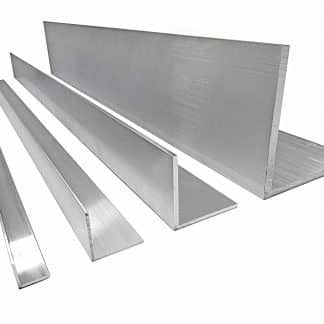
12mm x 12mm x 1.6mm Aluminium Angle (1/2″ x 1/2″ x 1/16″)
Price range: £2.14 through £7.46 ex VAT Select options This product has multiple variants. The options may be chosen on the product page -
12mm x 12mm x 3.2mm Aluminium Angle (1/2″ x 1/2″ x 1/8″)
Price range: £2.26 through £8.56 ex VAT Select options This product has multiple variants. The options may be chosen on the product page -
16mm x 16mm x 1.6mm Aluminium Angle (5/8″ x 5/8″ x 1/16″)
Price range: £2.21 through £8.03 ex VAT Select options This product has multiple variants. The options may be chosen on the product page -
16mm x 16mm x 3.2mm Aluminium Angle (5/8″ x 5/8″ x 1/8″)
Price range: £2.30 through £10.16 ex VAT Select options This product has multiple variants. The options may be chosen on the product page -
19mm x 19mm x 1.6mm Aluminium Angle (3/4 x 3/4″ x 1/16″)
Price range: £2.24 through £8.56 ex VAT Select options This product has multiple variants. The options may be chosen on the product page -
19mm x 19mm x 3.2mm Aluminium Angle (3/4″ x 3/4″ x 1/8″)
Price range: £2.65 through £10.16 ex VAT Select options This product has multiple variants. The options may be chosen on the product page -
22mm x 22mm x 3.2mm Aluminium Angle (7/8″ x 7/8″ x 1/8″)
Price range: £2.38 through £13.05 ex VAT Select options This product has multiple variants. The options may be chosen on the product page -
25mm x 25mm x 1.6mm Aluminium Angle (1″ x 1″ x 1/16″)
Price range: £2.27 through £8.51 ex VAT Select options This product has multiple variants. The options may be chosen on the product page -
25mm x 25mm x 3.2mm Aluminium Angle (1″ x 1″ x 1/8″)
Price range: £2.39 through £13.38 ex VAT Select options This product has multiple variants. The options may be chosen on the product page -
25mm x 25mm x 4.8mm Aluminium Angle (1″ x 1″ x 3/16″)
Price range: £2.53 through £20.54 ex VAT Select options This product has multiple variants. The options may be chosen on the product page -
25mm x 25mm x 6.4mm Aluminium Angle (1″ x 1″ x 1/4″)
Price range: £2.63 through £25.67 ex VAT Select options This product has multiple variants. The options may be chosen on the product page -
32mm x 32mm x 1.6mm Aluminium Angle (1.1/4″ x 1.1/4″ x 1/16″)
Price range: £2.31 through £10.16 ex VAT Select options This product has multiple variants. The options may be chosen on the product page -
32mm x 32mm x 3.2mm Aluminium Angle (1.1/4″ x 1.1/4″ x 1/8″)
Price range: £2.48 through £17.12 ex VAT Select options This product has multiple variants. The options may be chosen on the product page -
38mm x 38mm x 1.6mm Aluminium Angle (1.1/2″ x 1.1/2″ x 1/16″)
Price range: £2.34 through £11.23 ex VAT Select options This product has multiple variants. The options may be chosen on the product page -
38mm x 38mm x 3.2mm Aluminium Angle (1.1/2″ x 1.1/2″ x 1/8″)
Price range: £2.55 through £19.80 ex VAT Select options This product has multiple variants. The options may be chosen on the product page -
38mm x 38mm x 4.8mm Aluminium Angle (1.1/2″ x 1.1/2″ x 3/16″)
Price range: £3.01 through £31.01 ex VAT Select options This product has multiple variants. The options may be chosen on the product page -
38mm x 38mm x 6.4mm Aluminium Angle (1.1/2″ x 1.1/2″ x 1/4″)
Price range: £3.18 through £39.59 ex VAT Select options This product has multiple variants. The options may be chosen on the product page -
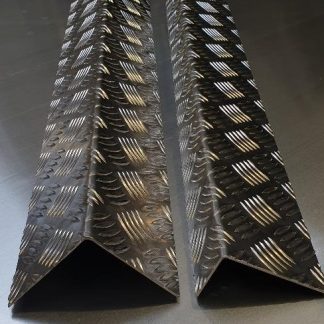
50mm x 50mm x 2mm Aluminium Chequer Plate Angles
Price range: £6.50 through £21.00 ex VAT Select options This product has multiple variants. The options may be chosen on the product page -
50mm x 50mm x 1.6mm Aluminium Angle (2″ x 2″ x 1/16″)
Price range: £2.42 through £13.38 ex VAT Select options This product has multiple variants. The options may be chosen on the product page -
50mm x 50mm x 3.2mm Aluminium Angle (2″ x 2″ x 1/8″)
Price range: £2.69 through £26.75 ex VAT Select options This product has multiple variants. The options may be chosen on the product page -
50mm x 50mm x 4.8mm Aluminium Angle (2″ x 2″ x 3/16″)
Price range: £3.21 through £37.72 ex VAT Select options This product has multiple variants. The options may be chosen on the product page -
50mm x 50mm x 6.4mm Aluminium Angle (2″ x 2″ x 1/4″)
Price range: £3.73 through £51.91 ex VAT Select options This product has multiple variants. The options may be chosen on the product page -
64mm x 64mm x 3.2mm Aluminium Angle (2.1/2″ x 2.1/2″ x 1/8″)
Price range: £3.36 through £33.16 ex VAT Select options This product has multiple variants. The options may be chosen on the product page -
64mm x 64mm x 4.8mm Aluminium Angle (2.1/2″ x 2.1/2″ x 3/16″)
Price range: £3.69 through £52.43 ex VAT Select options This product has multiple variants. The options may be chosen on the product page -
75mm x 75mm x 2mm Aluminium Chequer Plate Angles
Price range: £8.00 through £27.38 ex VAT Select options This product has multiple variants. The options may be chosen on the product page
Showing 1–25 of 33 results

Trade Account
Credit accounts & discounts area available. Simply get in tocuh and speak to us directly.

Free Cutting Service
1 x Free Cut - per line item purchased - receive the item at the exact length required for the job

Folding Service
We are able to offer our Aluminium Sheets & Chequer Plates and Stainless Steel Sheets folded to the customers specifications
We accept all types of credit and debit cards.

How Aluminium Equal Angle Is Measured
Aluminium angles are usually specified by the outside leg dimension × outside leg dimension × material thickness.
The outside leg dimensions can either be identical, in which case they are termed aluminium equal angles, or one leg can be longer than the other, in which case they are designated as aluminium unequal angles.
For example, a 25mm × 25mm × 3.2mm aluminium equal angle has two 25mm outside legs and a material thickness of 3.2mm.
At 1st Choice Metals, we stock aluminium 90-degree angles in a range of equal and unequal profiles. Our angles are available in several thicknesses, including:
- 1/16 inch or approximately 1.6mm
- 1/8 inch or approximately 3.2mm
- 3/16 inch or approximately 4.8mm
- 1/4 inch or approximately 6.4mm
- 3/8 inch or approximately 9.5mm
Many aluminium angles are manufactured to imperial dimensions, with the equivalent metric measurement shown alongside them. Our imperial and metric metal sizing guide can help you compare the available sizes.
Choosing the Right Size and Thickness
The appropriate size and thickness will depend on how the aluminium angle will be used.
Smaller and thinner aluminium angles are often used as decorative trims and edgings, including around windows, trade counters, worktops and shop fittings.
Larger and thicker profiles are commonly selected for frames, brackets, shelving, racking, signage and vehicle fabrication. The required profile should be chosen according to the expected load, span, fixing method and working environment. Obtain appropriate technical advice where structural performance or safety is critical.
If you need legs of different lengths, browse our aluminium unequal angles. You can also compare the full range on our aluminium angles and channels page.
Aluminium Equal Angle Grades
Our aluminium angles are supplied in different grades depending on the profile size and current stock. The selected grade can affect strength, machinability, forming characteristics and suitability for different finishes.
If a particular grade, specification or material certificate is essential, contact our team before ordering. Further information is available in our aluminium grades guide.
Mill Finish and Other Finishing Options
All our extruded aluminium angles are supplied in mill finish as standard, providing a natural silver-coloured appearance.
Aluminium angles may also be suitable for polishing, powder coating or anodising where a more decorative or protective finish is required. Contact us to confirm availability, suitability and lead times before ordering a specialist finish.
Mill-finish aluminium may display minor extrusion, handling or surface marks. If appearance is particularly important, discuss the required finish with us before placing your order.
Common Uses for Aluminium Equal Angle
Aluminium equal angle is used in a wide range of commercial, industrial and domestic projects, including:
- decorative trims and edging
- window and door surrounds
- trade counters and worktops
- shop fittings and exhibition stands
- brackets and corner supports
- shelving and racking
- frames and general fabrication
- signage products
- vehicle bodies, trailers and horse boxes
- DIY and maintenance projects
Aluminium does not rust in the same way as mild steel and offers good general corrosion resistance. However, its suitability for outdoor, coastal or chemically exposed environments will depend on the aluminium grade, finish and conditions of use.
Drilling, Cutting and Welding Aluminium Angle
Aluminium angle is commonly used for making brackets and fittings because it can be cut, drilled, countersunk and shaped using suitable workshop or DIY tools.
Sharp corners and cut edges can also be smoothed or rounded after cutting. Always use tools, blades and working methods suitable for aluminium, together with appropriate personal protective equipment.
Aluminium angles can also be welded to form frames. The L-shaped profile creates an internal lip that can support materials such as aluminium sheet or chequer plate, making it useful for shelving, racking and framed panels.
Weldability and welding technique depend on the aluminium grade and application. Confirm the material grade before carrying out specification-critical welding.
Aluminium Chequer Plate Angles
As an alternative to standard extruded aluminium angles, we also stock aluminium chequer plate angles.
These are cut and folded from aluminium chequer plate rather than produced as an extrusion. They provide a more industrial appearance and are commonly used for corner protection, edging and areas where a patterned finish is preferred.
Chequer plate angles are not produced to the same dimensional tolerances as extruded angles. The finished leg sizes may vary by a few millimetres because of the cutting and folding process.
For more information about standard, unequal and specialist angle profiles, visit our aluminium angles and channels page.
Aluminium Angle Cutting Service
We offer one free cut per line item on our aluminium equal angles. Additional cuts can be entered using the cutting tool on the relevant product page.
Our standard cutting tolerance is ±2mm. but please be sure to contact us should greater precision be required.The saw blade normally removes approximately 5mm of material with each cut, which is shown as cut waste or kerf in the cutting tool.
Products cut to bespoke dimensions cannot normally be returned, so check your measurements carefully before ordering. Read more about our free cutting service and delivery and returns terms.
If the size you require is not listed, contact us to discuss stock availability or a custom quotation. You can also browse our complete aluminium product range.
Frequently Asked Questions
What is aluminium equal angle?
Aluminium equal angle is an L-shaped, 90-degree aluminium profile with two legs of equal length. It is commonly used for edging, brackets, frames, shelving, shop fitting and general fabrication.
How is aluminium equal angle measured?
It is specified by the outside length of the first leg, the outside length of the second leg and the material thickness. For an equal angle, both leg measurements are the same.
What is the difference between equal and unequal aluminium angle?
Equal angle has two legs of the same length. Unequal angle has one leg longer than the other, making it suitable for applications that require different fixing or support dimensions.
Can aluminium equal angle be cut to length?
Yes. Select the required length and enter your cut dimensions on the product page. One cut is included free per line item, with additional cuts available through the cutting tool. The standard cutting tolerance is ±2mm, but please be sure to contact us should greater precision be required.
Can aluminium equal angle be used outdoors?
Aluminium equal angle offers good general corrosion resistance and does not rust like mild steel. Suitability for outdoor use will depend on the grade, finish and level of exposure, particularly in coastal or chemically aggressive environments.
Why choose equal angle instead of unequal angle?
Equal angle has two legs of the same length, making it a simple, versatile choice where equal support or fixing space is required on both sides.
Can equal angle be used to reinforce timber frames?
Yes. Aluminium equal angle can be used to strengthen corners, edges and joints in timber structures where the loading is appropriate.
Which thickness of equal angle is best for shelving brackets?
The correct thickness depends on the shelf depth, span and expected load. Heavier loads generally require thicker or larger angle sections.
Yes. Aluminium equal angle can be used to strengthen corners, edges and joints in timber structures where the loading is appropriate.
Can aluminium equal angle be mitre cut?
Yes. Aluminium angle can be mitre cut using a suitable saw blade designed for non-ferrous metals.